What Is a Spline Shaft? Types, Applications & Working Principle
What Is a Spline Shaft? Types, Applications, and How It Works
https://www.a2zmetric.com/spline-shafts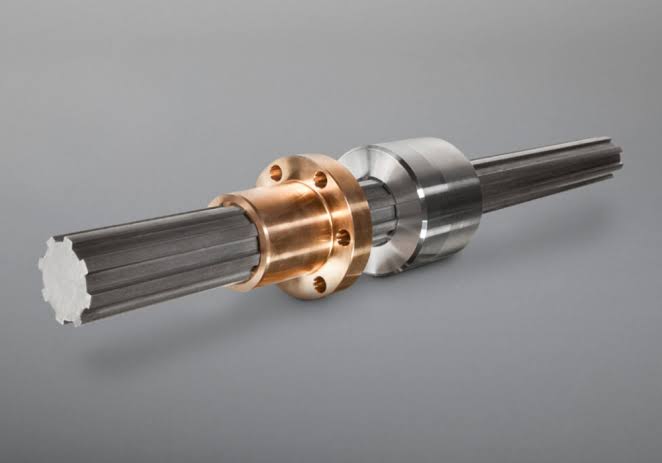
In industrial machinery, efficient power transmission is essential for ensuring smooth operation and long equipment life. One mechanical component that plays a critical role in transmitting torque while maintaining precise alignment is the spline shaft.
Spline shafts are widely used in manufacturing equipment, automation systems, automotive transmissions, aerospace assemblies, packaging machinery, and heavy-duty industrial machines. Their ability to transfer high torque with minimal backlash makes them a preferred alternative to traditional keyed shafts in many applications.
This guide explains what a spline shaft is, how it works, the different types available, their common applications, advantages, and key factors to consider when selecting one.
What Is a Spline Shaft?
A spline shaft is a cylindrical shaft with a series of evenly spaced grooves or teeth machined along its outer surface. These grooves engage with matching internal splines in a hub, gear, coupling, or other mating component.
Unlike a keyed shaft that transfers torque through a single key, a spline shaft distributes the load across multiple teeth. This allows for:
- Higher torque transmission
- Better load distribution
- Improved alignment
- Reduced wear
- Greater reliability
Depending on the application, spline shafts can either remain fixed or allow the connected component to slide along the shaft while continuing to transmit torque.
How Does a Spline Shaft Work?
A spline shaft works by mechanically interlocking with a matching internally splined component.
When the shaft rotates:
- The external spline teeth engage with the internal spline grooves.
- Torque is distributed across multiple contact surfaces.
- The connected component rotates with the shaft.
- In sliding spline designs, axial movement is possible while maintaining rotational power transmission.
This design minimizes stress concentration and provides a stronger connection than many conventional shaft arrangements.
Main Components of a Spline Shaft Assembly
A typical spline assembly consists of:
Spline Shaft
The external shaft with precision-machined spline teeth.
Splined Hub
The mating component containing internal spline grooves.
Bearings
Support shaft rotation and reduce friction.
Couplings or Gears
Transmit power to additional machine components.
Together, these components create a robust power transmission system capable of handling demanding industrial environments.
Types of Spline Shafts
Different applications require different spline profiles. Below are the most common types.
1. Straight Spline Shaft
Straight splines have parallel-sided teeth.
Features
- Easy to manufacture
- Cost-effective
- Suitable for moderate torque
- Common in general machinery
Typical applications include conveyors, agricultural equipment, and machine tools.
2. Involute Spline Shaft
Involute splines feature curved tooth profiles similar to gear teeth.
Advantages
- Higher torque capacity
- Better load distribution
- Improved centering
- Longer service life
These are widely used in automotive transmissions, aerospace systems, and precision industrial machinery.
3. Serration Splines
Serration splines have numerous fine teeth designed for precise positioning.
They are commonly found in:
- Precision instruments
- Automotive steering systems
- Small mechanical assemblies
4. Helical Splines
Helical splines use angled teeth rather than straight ones.
Benefits include:
- Smoother engagement
- Reduced vibration
- Lower operating noise
- Improved performance at high speeds
These are often used in premium mechanical systems requiring quieter operation.
Common Applications of Spline Shafts
Spline shafts are used across many industries because they combine strength, precision, and durability.
Manufacturing Equipment
Industrial machines rely on spline shafts to transmit torque between motors, gearboxes, and moving assemblies.
Examples include:
- CNC machines
- Printing equipment
- Textile machinery
- Packaging machines
Automotive Industry
Spline shafts are essential in:
- Manual transmissions
- Automatic transmissions
- Drive shafts
- Steering systems
- Differential assemblies
They enable efficient power transfer while accommodating movement between components.
Robotics and Automation
Automation equipment demands precise positioning with minimal backlash.
Spline shafts help achieve:
- Smooth motion
- High positioning accuracy
- Reliable torque transmission
Agricultural Machinery
Farm equipment frequently operates under heavy loads.
Spline shafts are used in:
- Tractors
- Harvesters
- PTO (Power Take-Off) systems
- Rotary implements
Aerospace
Aircraft systems require lightweight yet durable mechanical components.
Spline shafts are used in:
- Flight control systems
- Engine accessories
- Landing gear mechanisms
Heavy Industrial Equipment
Industries such as mining, steel, and construction depend on spline shafts for demanding applications involving continuous heavy loads.
Advantages of Using a Spline Shaft
Spline shafts offer several advantages over traditional keyed shafts.
Higher Torque Capacity
Multiple spline teeth distribute torque evenly, reducing localized stress and allowing greater power transmission.
Better Alignment
The spline profile maintains accurate alignment between connected components.
Reduced Wear
Because the load is shared across multiple teeth, wear occurs more gradually, extending service life.
Smooth Sliding Motion
Sliding spline shafts allow axial movement without interrupting torque transmission.
Improved Reliability
Spline connections are less likely to loosen compared to keyed assemblies, especially in high-vibration environments.
Compact Design
Spline shafts eliminate the need for larger keys or additional fastening components, enabling more compact machine designs.
Materials Used for Spline Shafts
The choice of material depends on the operating environment and load requirements.
Common materials include:
Carbon Steel
- High strength
- Good machinability
- Cost-effective
- Suitable for general industrial use
Stainless Steel
- Corrosion resistant
- Ideal for food processing
- Suitable for pharmaceutical equipment
- Performs well in marine environments
Alloy Steel
- Excellent fatigue strength
- High hardness
- Suitable for heavy-duty machinery
Many spline shafts also undergo heat treatment to improve wear resistance and mechanical strength.
How to Choose the Right Spline Shaft
Selecting the correct spline shaft requires evaluating several factors.
Torque Requirements
Ensure the shaft can safely handle the required operating torque.
Spline Type
Choose between straight, involute, serration, or helical splines based on your application's performance requirements.
Material
Select carbon steel, stainless steel, or alloy steel depending on the environment.
Shaft Dimensions
Verify:
- Outside diameter
- Number of teeth
- Spline pitch
- Length
- Tolerances
Operating Environment
Consider exposure to:
- Moisture
- Dust
- Chemicals
- High temperatures
- Corrosive conditions
Manufacturing Standards
Using standardized spline dimensions improves compatibility with mating components and simplifies maintenance.
Spline Shaft vs. Keyed Shaft
|
Feature |
Spline Shaft |
Keyed Shaft |
|
Torque Capacity |
High |
Moderate |
|
Load Distribution |
Even across multiple teeth |
Concentrated on one key |
|
Alignment |
Excellent |
Good |
|
Sliding Capability |
Yes (in many designs) |
Limited |
|
Wear Resistance |
High |
Moderate |
|
Precision |
High |
Moderate |
For high-performance industrial applications, spline shafts generally provide better durability, precision, and reliability.
Conclusion
Spline shafts are a vital component in modern power transmission systems. Their ability to distribute torque across multiple contact points results in improved strength, reduced wear, and greater reliability compared to traditional keyed shafts.
Whether used in manufacturing, automotive, aerospace, agricultural machinery, or industrial automation, spline shafts provide precise and efficient mechanical performance. Choosing the right spline profile, material, and dimensions ensures long service life and optimal machine efficiency.
If you're sourcing metric spline shafts, consider factors such as material grade, dimensional accuracy, torque requirements, and manufacturing quality to ensure dependable performance in your application.
Frequently Asked Questions (FAQs)
1. What is the purpose of a spline shaft?
A spline shaft is used to transmit torque between mechanical components while maintaining accurate alignment. It can also allow axial movement in applications that require sliding motion.
2. What is the difference between a spline shaft and a keyed shaft?
A spline shaft uses multiple teeth to distribute torque evenly, whereas a keyed shaft relies on a single keyway. Spline shafts generally offer higher torque capacity, better alignment, and improved durability.
3. What industries commonly use spline shafts?
Spline shafts are widely used in automotive, manufacturing, aerospace, robotics, agricultural machinery, packaging equipment, mining, and industrial automation.
4. What materials are spline shafts made from?
Common materials include carbon steel, stainless steel, and alloy steel. The choice depends on factors such as load requirements, operating conditions, and corrosion resistance.
5. What are the different types of spline shafts?
The main types include straight splines, involute splines, serration splines, and helical splines. Each type is designed for specific load capacities and application requirements.
6. Can spline shafts handle heavy loads?
Yes. Spline shafts are specifically designed to transmit high torque and heavy loads because the force is distributed across multiple spline teeth rather than concentrated at a single point.
7. How do I choose the right spline shaft?
Consider the required torque, spline profile, shaft dimensions, material, operating environment, and compatibility with mating components. Following recognized manufacturing standards also helps ensure reliable performance and interchangeability.